Skip to content
English
  • 検索欄が空のため、提案はありません。

Volume measurement - PIX4Dsurvey

体積測定ツールは、基底面(体積ポリゴンで定義される)とアクティブな点群との間の体積を測定します。デフォルトでは、この手法ではすべての頂点を接続し、基底面の上下にある体積を三角形分割します。

動画: PIX4Dsurvey tutorial: Create volume measurements in PIX4Dsurvey


動画: Do you want to measure the volume of an object, even against a wall or in a corner? Try volume measurement in PIX4Dsurvey and get your data with fast, simple steps!


新しいボリュームを作成する方法 

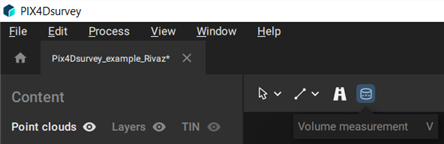
    1. ~について ツール バー上で、クリックして体積測定ツールを選択します volume_icon.png or use the keyboard shortcut V.

      PIX4Dsurvey_Volume

    2. To draw a volume, left-click on points in the 3D view. Right-click or press enter to complete the volume base polygon.
    3. (任意)頂点を正確にマークするには、簡易選択ツールを使用してボリュームを選択します ic_cursor_black.png. The position of each vertex can be corrected in the 3Dビュー, on the images, or using the vertex editor.
    4. (任意)ボリュームの底面の頂点に共通の標高を割り当てるには、まず簡易選択ツールを使用してそのボリュームを選択します ic_cursor_black.png. その後、 特性 パネル ツール一覧、クリック 頂点を揃える vertex_align.png 頂点をどのように配置するかを選択します。
      Align_vertices_PIX4Dsurvey
Tip: Aligning the vertices to the lowest base elevation simplifies the volume measurement for stockpiles leaning on walls or in a bay. More information can be found in the align vertices article.

Note: Starting from version 1.85, it is possible to import a LandXML file as a base surface for volume computations. 

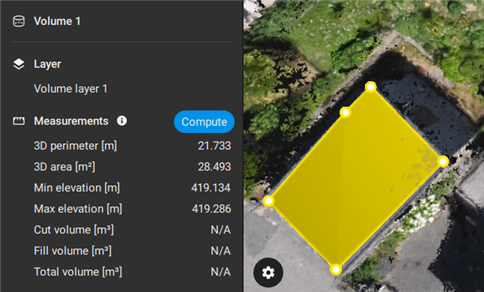
After drawing the volume, details about the volume measurement are displayed in the 特性 パネル ツール一覧具体的には:

物件  説明
Name 編集可能なボリューム名
説明 (任意)特定のボリュームについて説明するための短い説明文を入力するテキストボックス
レイヤー この巻が属する層
Measurements

本書の主な内容は以下の通りです: 

  • 3Dの周囲
  • 3D area
  • 最低標高
  • 最高標高

PIX4Dsurvey_volume_measurement.png

注: A new volume layer can be added by selecting the add.png icon of the volume layers on the left sidebar. The volume can be moved to another volume or vector layer by right-clicking on it.
Tip: It is possible to use the Stockpile Detection tool to easily detect and create volume polygon around stockpiles.

How to compute the volume

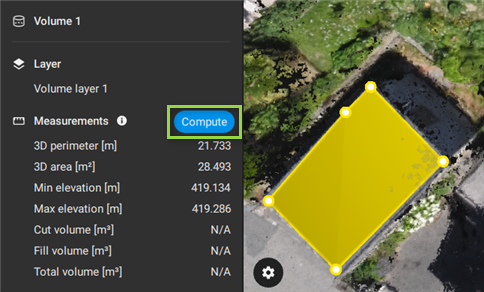
Once the volume is drawn, in the Measurements section of the Properties panel, click Compute to trigger the volume computation.

Compute_volume_PIX4Dsurvey Compute_volume_PIX4Dsurvey_2-1
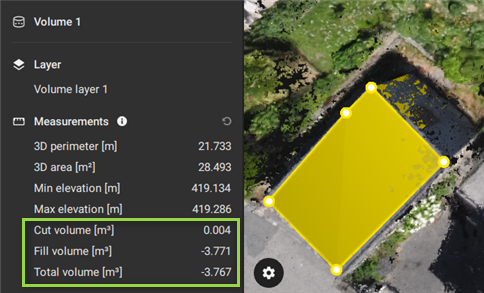
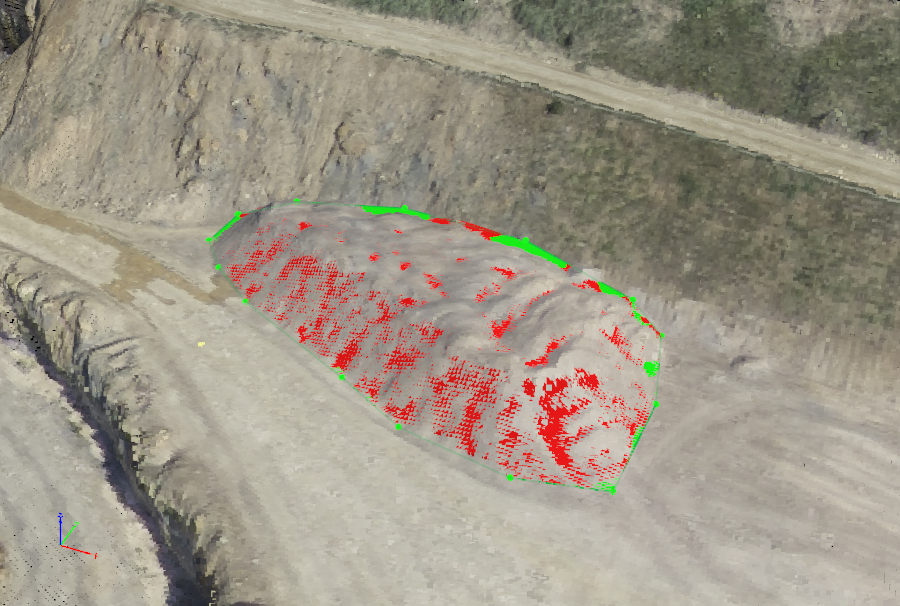
体積の測定が完了すると、切土・盛土の体積と誤差が表示されます。

具体的には:

  • カット体積 [単位3]: 体積基準面より上の体積 。この体積は、体積基準面と表面の間で測定される。
  • 充填体積 [単位3]:体積基準面より下の体積。この体積は、体積基準面と表面の間で測定されます。
  • 正味体積 [単位3]:切土量と盛土量の絶対差(切土量盛土量)
  • 総体積 [単位3]:総体積 (切土量盛土量)。
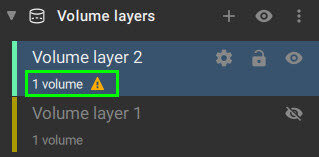
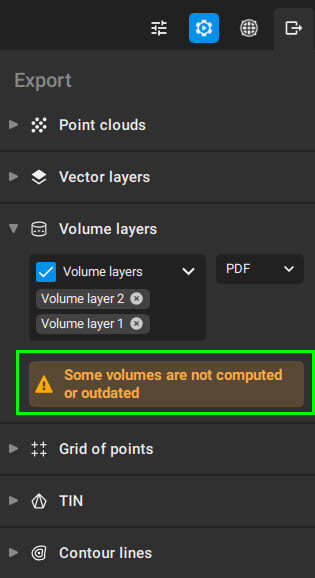
Important: If the polygon defining a volume is modified (adding/removing/moving vertices), a warning appears in the Volume layers list and the Export tab, indicating that the volume measurement is now outdated.
Warning_volume
It is needed to compute the volume again to take the modifications of the volume polygon into account in the volume measurement.
Tip: Only the displayed point cloud points are used in the volume calculation. This means that, for example, in the case where the terrain filter classified a stockpile to be terrain, and a conveyor above it to be non-terrain, it is just needed to turn off the non-terrain layer before calculating the volume to get the right results. No need to delete points that should be excluded.

How to export a volume or volume report

After computing the (cut/fill) volume measurements, the Volume report, the volume polygon and the 3D volume are available to be exported.

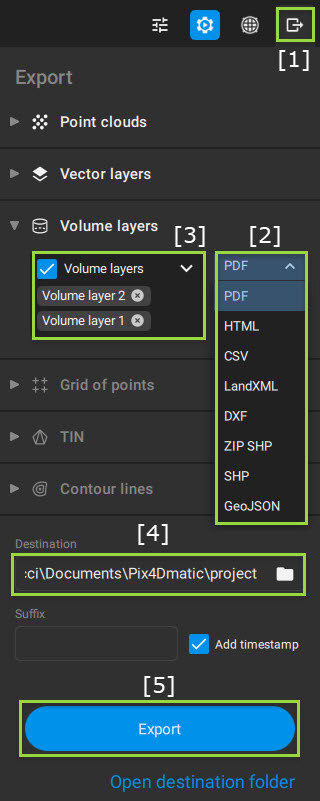
Export_volume_PIX4Dsurvey

To export the Volume report:

  1. メニューバーで、[ ] をクリックします ファイル、そして エクスポートあるいは、右上の export.jpg エクスポート. The エクスポート panel opens on the left.
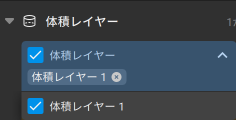
  2. (Optional) Unselect the output Volume layers that do not need export.
  3. In the Export panel, select the output format (PDF, HTML, or CSV for volume reports. LandXML for the 3D volumes. DXF, ZIP SHP, SHP, or GeoJSON for the volume polygon).
  4. In the Destination section, navigate to the path where the files should be saved.
  5. エクスポート」をクリックします。
動画: The following video shows how to generate a volume report with PIX4Dsurvey.

How PIX4Dsurvey calculates the Volume measurement

PIX4Dsurvey calculates the volume as follows:

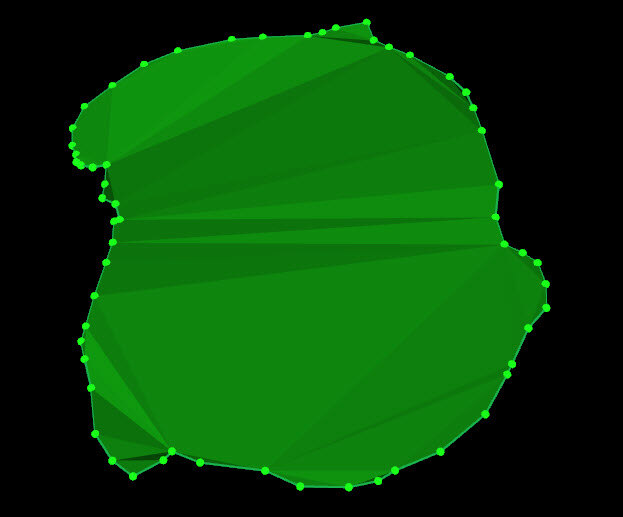
1. A new volume is drawn. For more information on how to draw a volume: 新しいボリュームを作成する方法. 巻数

Note: PIX4Dsurvey creates the base taking into account the altitude of each vertex.

volume_base

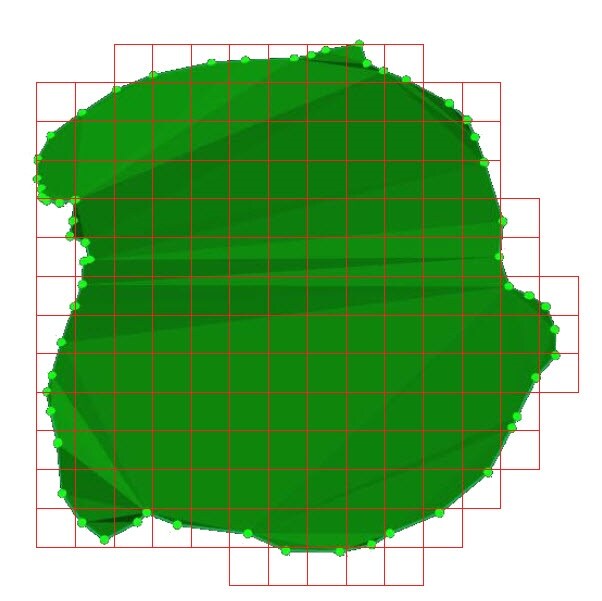
2. PIX4Dsurvey projects a grid with GSD spacing on the base.

volume_base_grid_white

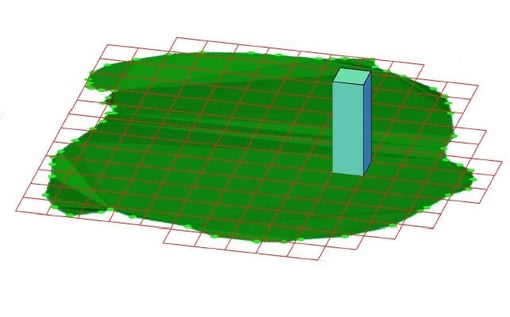
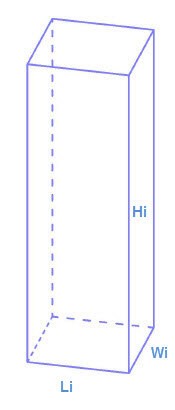
3. For each cell i of the grid, its volume (Vi) is given by:

Vi = Li * Wi * Hi

Where:

Li = the length of the cell.
Wi = the width of the cell.
Hi = the height of the cell.

The Length (Li) and Width (Wi) are equal to the project's GSD.

Li =Wi = GSD

The Height (Hi) is given by:

Hi = ZTi - ZBi

Where:

ZTi = the terrain altitude of each cell at the center of the cell.
ZBi = the base altitude of each cell at the center of the cell.

Therefore, the volume Vi of cell i is given by:

Vi = GSD*GSD* (ZTi - ZBi)

注:
  • ZTi is the altitude of the 3D terrain corresponding to the center of the cell i.
  • ZBi is the altitude of the base surface of the volume corresponding to the center of the cell i .
volume_pixel_3d.jpg
volume_pixel_element_dimensions.jpg

4. PIX4Dsurvey calculates 2 volumes:

    • The Cut volume Vc is the volume between the base and the 3D terrain when the terrain is higher than the base.

Cut volume = VC = VC1 + VC2 +...VCN

Where:

VC1...N = Cut volume for cell i..N

    • The Fill volume VF is the volume between the base and the terrain when the terrain is lower than the base.

Fill volume = VF = VF1 + VF2 +...VFN

Where:

VF1...N = Fill volume for cell i...N.

Note: The Fill Volume is given with negative value/sign.

5. The Total volume is given by:

Total Volume = VT =VC+ VF